


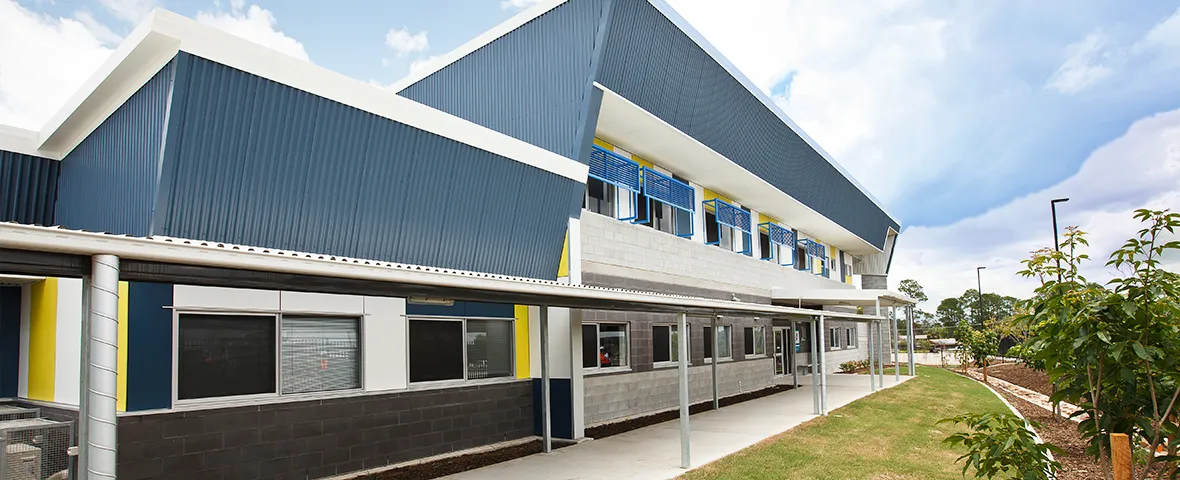


A university built on innovation and sustainability
Ranked in the top 1% of universities worldwide in the highly regarded Academic Ranking of World Universities (ARWU) 2020, Curtin University is immersed in technology-rich environments and inspired by innovation, creativity and high-impact research. Its campuses welcome 55,000 students with the largest in Perth boasting 116 hectares. Perth Campus is the heart of the biggest concentration of innovative industry and research in Western Australia. The university plans to expand Perth into a ‘City of Innovation’: a vibrant urban hub of economic vitality, world class knowledge, sustainable living, creative spirit and cultural diversity – a destination in its own right.
The Curtin properties, facility and development team are responsible for planning and management across all Western Australian campuses. They are tasked with leading and executing the development of this project, and in doing so, identified the need for an integrated maintenance and workflow management system to support the rapid expansion.
Digital support for a global community
“Running a campus the size of Bentley is like running a small city”, advises Jason Yeoh, Properties Technology Portfolio Manager.
Curtin has invested significantly in its modern campuses, and the properties team is responsible for innovative projects such as a driverless campus bus, automated speed bumps to control traffic flow, and self-monitoring and compacting bins – to name a few. In 2015, the university was awarded Australia’s first 5-star ‘Green Star-Communities’ rating from the Green Building Council of Australia (GBCA) for its ‘Greater Curtin’ strategy. The University was re-certified in early 2020 and was awarded a 6-star Green Star Communities rating. This requires Curtin to create a community that provides a culturally rich, safe and productive environment that seeks to reduce its ecological footprint.
Dealing with an estate such as this relies on communication, data and accuracy, and the previous
computer aided facilities management (CMMS) system no longer met the challenge. The new software solution needed to be flexible, easy-to-use and feature rich to provide the required functionality now and into the future, with the ability to scale in line with the university’s ambitious growth plans. The previous system had needed extensive customization, so the team favoured an off-the-shelf CMMS that required little to no customization to meet their needs.
QFM from Service Works Global (SWG) met this brief and impressed the team because of the company’s extensive experience in the education sector, its local support team and partnership approach to working with clients.
21st century communication
Curtin averages over 25,000 reactive jobs raised per year, so routing all requests through the help desk to then manually allocate and track each one was not a viable option. QFM automates the work allocation process which helped the university better manage their resources. Maintenance or service requests logged onto the system are automatically prioritised and escalated to ensure that service levels are consistently achieved. Full and immediate access to information via the QFM mobile app
ensures that requests are actioned and completed more quickly, and the likelihood of work requiring a second visit due to lack of information is drastically reduced. As QFM is a fully centralized system, managers have full visibility of their team’s workloads and availability. Furthermore, the app has offline capability, meaning that work can continue unaffected in areas of no signal.
“Adopting a fully integrated solution with a dedicated mobile app enabled us to create a more responsive
workforce,” adds Yeoh.
In addition to a better flow of information, the app has helped drive and support a ‘safety first’ culture. Forms and checklists can be fully customized and configured by the team to show at any point during a job, such as a health and safety analysis form to be agreed and signed before work commencement. Previously the team managed this using a third-party mobile app, but with no link between
this and the CMMS, it resulted in a time intensive and manual cross-referencing process for audits.
Making sense of data
QFM gives the team access to a wealth of data at the touch of a button, including jobs in progress, work
nearing the deadline or overdue – as well as who each job is assigned to, asset maintenance history and
performance, and budgetary information. QFM has over 250 built-in reports as standard, which can be further refined by the user to find the required information. Curtin also uses SWG’s Reporting Connector tool which provides a direct link from QFM to Microsoft Excel. This allows facility managers to work with live data through the familiar Excel interface and tools such as pivot tables and graphical reports.
Through a mix of standard and custom templates and dashboards built by SWG, the team is able to drill down into the data to access key information and analyse trends to gain a complete picture of the facilities, assets and properties at the current moment in time, or over any chosen period. The easy interface empowers managers to create their own pivot tables to discover and cross reference data. This has led to improved transparency, compliance and auditability across all campuses.
A partnership approach
Curtin University worked closely with SWG throughout the implementation to ensure the system met its
objectives and worked effectively from launch day and beyond. Drawing on their extensive industry and
technology experience, SWG has formed a partnership with Curtin.
SWG provides 24/7 online support as well as running a number of on-site workshops to look into how Curtin’s business process and QFM could support its asset management strategy and the Greater Curtin strategy. In addition to flexible workflows within QFM to drive standardization and service automation, QFM will help Curtin maintain their green credentials through superior end-to-end asset management. The software manages assets across their whole lifecycle, reducing asset downtime, improving performance, extending asset life and lowering maintenance costs. Planned preventative
maintenance (PPM) works will be scheduled by QFM and sent directly to Curtin contractors, removing time-consuming administration, and improving rectification time. Well maintained assets draw less energy; and replacing paper job sheets and creating 60 digital maintenance forms on the mobile app has enabled the team to go paper free, helping to create a more sustainable organisation.
Future focus
Curtin are trialling a new self-service portal developed by SWG to manage property service requests. With the large investment in the Bentley campus over the coming years, the portal presents a solution to help the team manage their buildings. This portal will provide a self-service graphical dashboard allowing users to log issues, access site documents, campus news, and view assets and schedules. The team are also looking into adding barcodes to their assets, which when scanned with a smartphone would provide immediate access to the asset history as well as any outstanding requests attached to it.
In line with the university’s ongoing expansion and innovative management, Curtin’s longer-term objective is to implement predictive maintenance across the asset portfolio. The first step in achieving this is reviewing data capture and processes to ensure integrity, then subsequently QFM, other systems and data from sensors will feed into a data warehouse and machine learning algorithms will be applied.
This approach will further support their streamlined asset management strategy and help deliver the exceptional service required to allow Curtin to achieve its ambitious goals.


