


With infrastructure construction and operations responsible for approximately 70% of global greenhouse gas (GHG) emissions, investment in innovation and new technology is required to improve carbon emissions and energy efficiency.
Performance-based contracts are increasingly being used within infrastructure projects to improve sustainability, particularly in roads and water utilities. According to a study by World Bank, performance-based contracts with the private sector are 68% more effective in reducing water loss than initiatives implemented by utilities alone.
Performance-based contracts describe a desired result or outcome, with payment being contingent of a series of SLAs and KPIs. Importantly, they do not make specific demands on how that level of performance is reached, therefore giving ample opportunity to foster innovation and introduce technology. While it’s true that the looming threat of climate change means public services and projects must adhere to increasingly stringent environmental standards and net zero targets, we’re also seeing sustainability pitched as a way to incentivise performance and create more collaborative relationships.
Back to basics
Before delving into more ‘innovative’ methods, FM service providers must ensure they have the means to deliver an effective asset management strategy, using a computer-aided facilities management software, or CAFM. Most extensively used for managing help desk and reactive maintenance, a good system also makes it easy to set up PPMs for each asset, capturing whole lifecycle costs and identifying performance issues with an asset or group of assets (often an impossible task when dealing with maintenance in isolation).
Sensing the future
The price of industrial sensors continues to fall, making predictive maintenance more accessible. Sensors can identify potential problems before a breakage happens via anomalous or out-of-range readings, allowing for better maintained assets that draw less energy. And, more reliable assets means easier adherence to contract KPIs, mitigating some risk on deductions. Sensors can also be used for energy management. SWG’s IoT platform Senslinc, for example, graphically shows which assets, work areas or floors are drawing the most energy, or falling outside expected levels, so that action can be taken. Using a variety of IoT sources allows FM teams supreme insight into performance management. For example, taking into account footfall, run time and a weather forecast can forewarn of mechanical failure of an escalator due to grit trampled in from snowy conditions outside. By knowing what is likely to happen, FMs can juggle their priorities to ensure resources and parts are available, and combine works to reduce trips. And for large countries with vast open spaces, the more that can be achieved in one trip the better.
Virtual assets and infrastructure
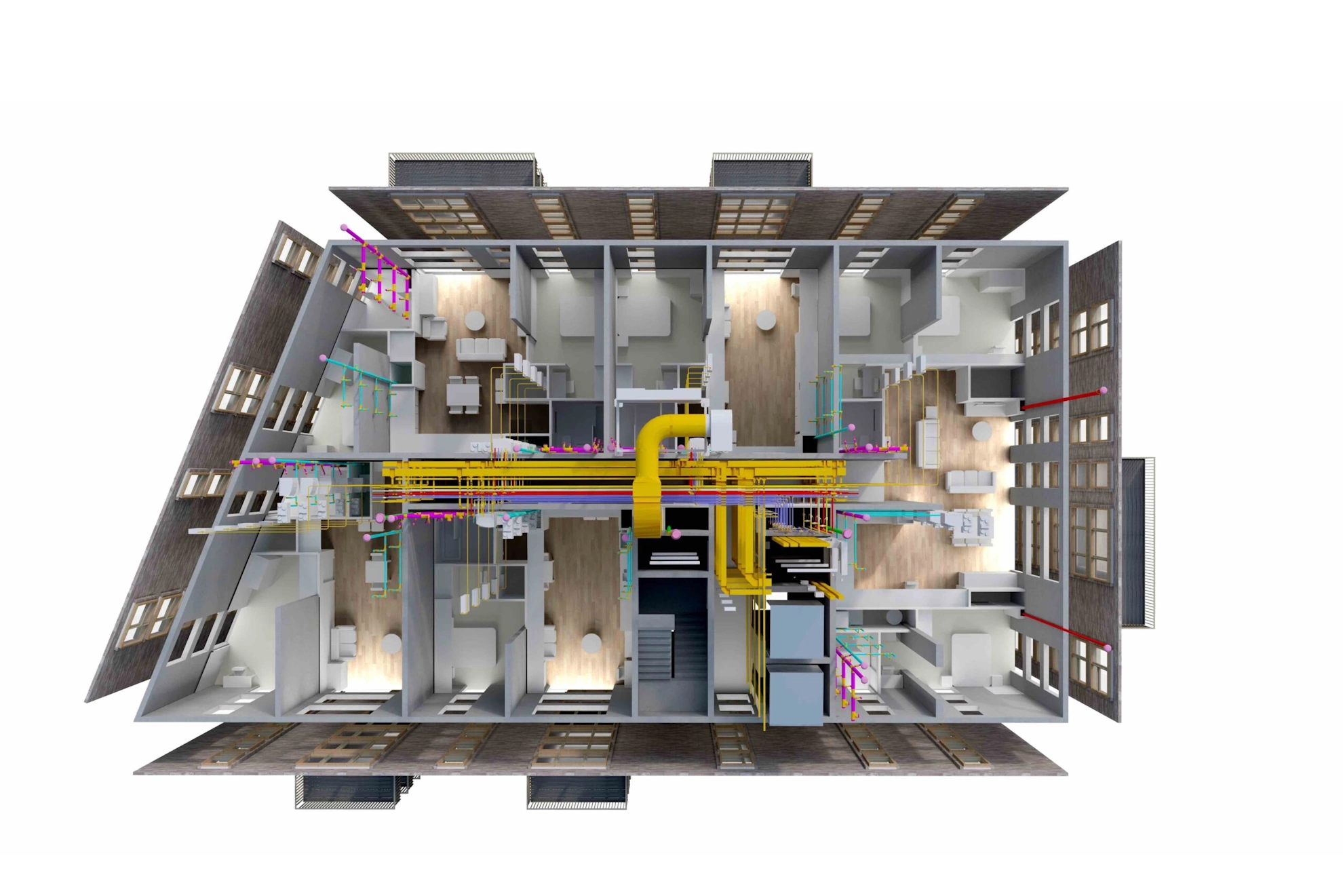
Transforming the infrastructure into a digital twin (read more about this in our previous blog on growing a smart building and digital twin) is an initial expense, but provides the opportunity to be at the forefront of sustainability – both environmentally and operationally. A digital twin is a virtual replica of the project, mirroring its condition, environment and usage in real time. They can be used to test different scenarios, like the impact on air quality of a new asset, or how cooling systems would cope with more people in the building. This reduces the impact of disruption or dips in performance of the ‘live’ environment.
Operational sustainability
While the private sector must start investing more heavily in environmental sustainability, working across long contract terms means they need to have a strong foundation for their operational sustainability. For the service provider, contracted to deliver performance-based services, certainly a CAFM system with an integrated payment mechanism (paymech) is a must. The paymech maps each contract term exactly into the software, providing visibility of potential failures and allowing for rectification. It also calculates rewards or deductions based on all work carried out over the month (or given period).
The CAFM manages resources to ensure maintenance plans are created in line with available resource, and the paymech tracks what and when is due. For performance-based contract providers with multiple contracts, this can quickly become a minefield. For service provider Mitie, for example, many of the KPI service levels are associated with the facility opening hours. The main areas of a 24-hour healthcare centre could trigger a failure or deduction for an inadequate response time, but within the premises there might be offices or administration areas which are only open during standard business hours. A school may have a swimming pool with year-round public access, classrooms accessible during term time only, offices in use during school holidays but not bank holidays. Having such contract intricacies in the system underpins high performance service, strengthens the partnership and drives more sustainable operations.
Keep up to date on the latest industry and technology developments: sign up to receive SWG’s blog delivered straight to your inbox: