


There’s no secret to the benefits of planned preventative maintenance (PPM) compared to reactive maintenance. Timely servicing of assets reduces unexpected breakdown and inconvenience, minimises costs compared to a repair, and extends equipment life. Creating schedules for each asset is a daunting task on a spreadsheet, but CAFM makes the process simple – and even more so when integrated with SFG20.
What is SFG20?
SFG20 was created in 1990 by the Building Engineering Services Association (BESA) and is recognised as the industry standard for building maintenance specifications. The database contains over over 1,500 customisable schedules, kept up to date with around 700 updates per year. This reduces the need to research from scratch and helps standardise maintenance, while using manufacturer guidance where applicable.
What information is included in SFG20 maintenance schedules?
Schedules include step-by-step tasks of what is required to maintain each asset, the frequency with which each task should be performed to avoid under- or over-maintaining, and what skills are required from the engineer (mechanical, gas safe, electrical etc).
A colour-coding system is used to help prioritise tasks in order to optimise maintenance. SFG20 task maintenance schedules display the recommended rating based on legislation, regulations and industry best practice.
- Red – statutory / legal (to ensure legal compliance)
- Pink – mandatory / business critical (to ensure sector / organisation compliance)
- Amber – optimal (function critical and industry best practice)
- Green – discretionary (non-critical maintenance).
How is SFG20 used in practice?
As SFG20 is web-based, it can be integrated with the more progressive CAFM systems, like Service Works Global’s QFM software. Rather than performing a blanket import, FMs can choose which schedule templates are actively linked to the QFM maintenance schedule; and configure them as required. Some schedules may not be applicable to a site and failure to remove them can cause confusion in a contract, so it’s easy to review and disable tasks on the CAFM side. As and when schedules are updated by BESA, Facilities-IQ notifies of updates and, via the API, the changes can be reviewed side by side and then approved updated can be synced into QFM so teams follow the latest guidance and remain compliant.

Can SFG20 be used with BIM?
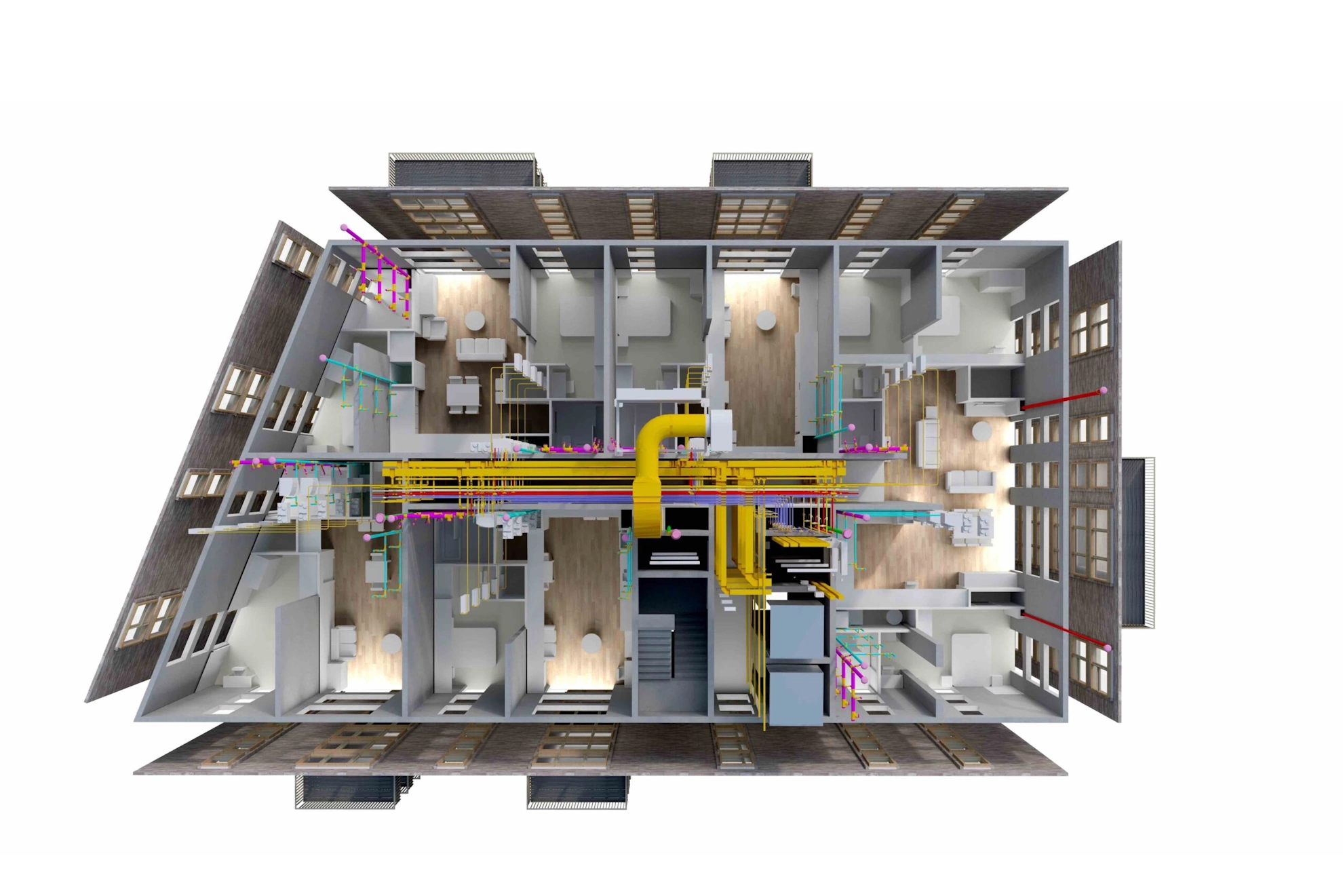
The Hackitt Review following the Grenfell Tower disaster has placed emphasis on digitising processes and establishing best practice across the building lifecycle. SFG20 schedules within CAFM software can be used as part of the Golden Thread to show maintenance has been planned to meet industry standards; time and date stamped upon completion for auditability. Organisations using BIM will be pleased to know that SFG20 aligns with Uniclass 2015 (developed by NBS) to support digital adoption across the building lifecycle.
Uniclass 2015 uses tables to classify all items from a whole facility down to a door hinge, standardising how project information is classified and is a requirement of BIM (set out by ISO 19650). Maintenance schedules are developed for assets described in Uniclass, and SFG20 is aligning codes to support consistent mapping between the two systems.
Sarah Delany, Head of Classification at NBS, said: “The construction industry is increasingly digital and by mapping between the two systems clients can more easily take a whole-life approach to their building projects. Thus bringing the golden thread one stitch closer.”
For more information on planned preventative maintenance, asset management or QFM integration with SFG20, contact us here.
Keep up to date on the latest industry and technology developments: sign up to receive SWG’s blog delivered straight to your inbox: