



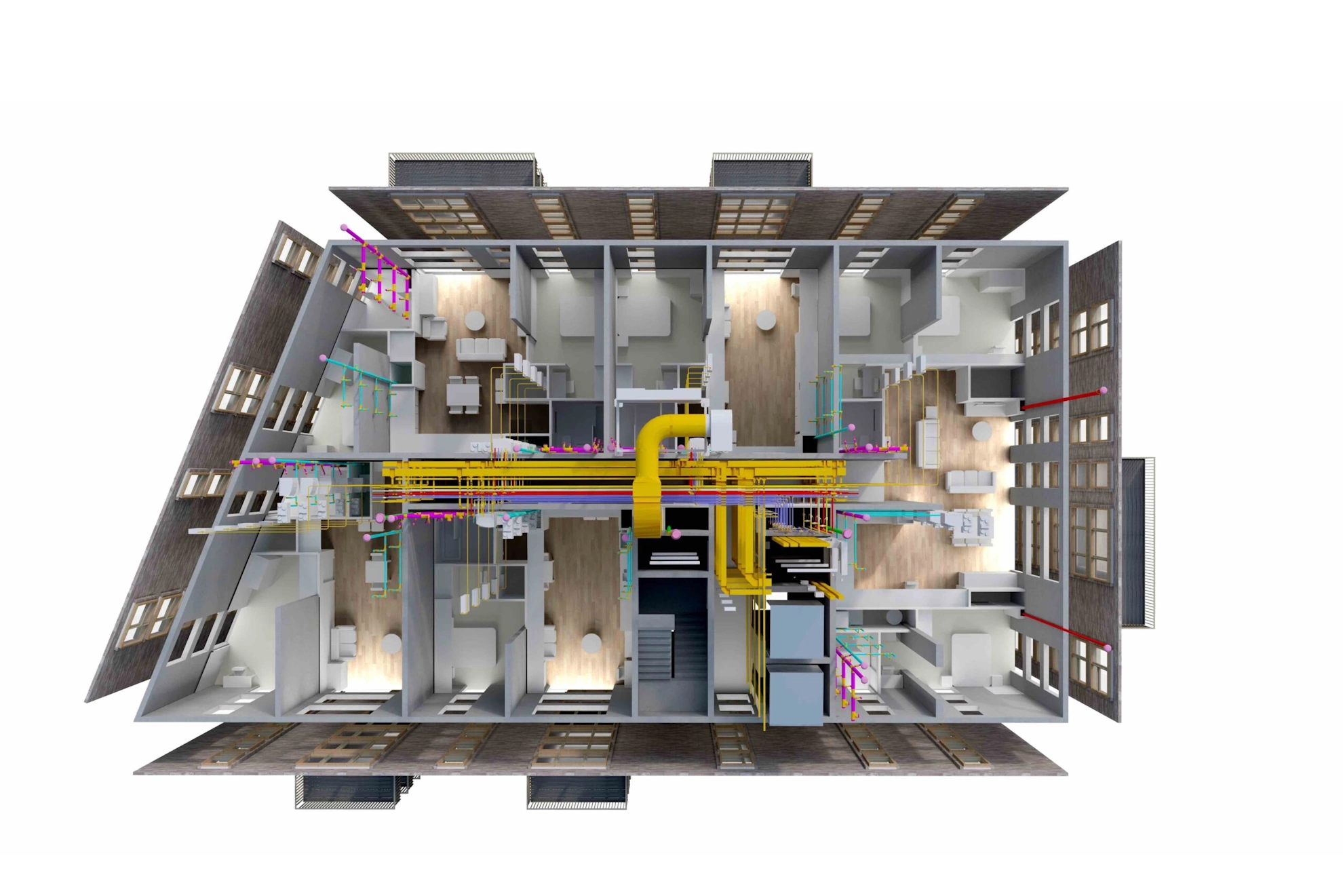

Leveraging technology to support estate services
The Single Living Environment and Accommodation Precinct, or Single LEAP, project was established by the Australian Government’s Department of Defence to address and improve the standard of live-in accommodation for single military members. The project has been carried out in two phases under public-private partnership (PPP) arrangements.
LEAP Phase one culminated in a A$300 million 30-year PPP contract for the design, construction, operation and maintenance of 1,395 accommodation units at Defence bases in Sydney, Brisbane and Ipswich. The contract was awarded to the Plenary Living consortium which provided each of the accommodation units with a self-contained ensuite, private balcony, kitchenette, and nearby car parking and storage.
The Plenary Living consortium was subsequently successful in being awarded Phase 2 of the project, a A$900 million 30-year PPP contract to provide, maintain and operate a further 3,014 accommodation units constructed at 14 Defence bases spread throughout Australia. In addition to the provision of over 4,400 individual accommodation units, the LEAP project has seen the Plenary Living consortium deliver a range of social facilities such as basketball courts, BBQ shelters and recreational pavilions. Plenary maintains these facilities and associated infrastructure in partnership with ESS Support Services Worldwide, a member of the Compass Group.
Powerful reporting for multi-contract management
QFM software was chosen from the outset to manage the operation and maintenance of LEAP Phase 1, having been used by Plenary on other PPP contracts such as Casey Hospital (VIC) and South Australian Police and Courts (SA). The software was able to be tailored for each contract and Plenary was confident that QFM’s flexibility and powerful reporting capabilities would prove the right choice for Single LEAP.
Whilst LEAP Phase 2 was a separate contract to LEAP 1, operated under slightly different parameters, and commenced some five years later than LEAP Phase 1; Plenary worked with Service Works Global to ensure the software could manage both contracts concurrently. The software was able to be configured to maintain database information such as assets and contractors across the two LEAP contracts whilst maintaining the integrity of each.
A dynamic dashboard shows real time information and provides an intelligent traffic light system to intercept potential failures. It highlights jobs in amber to notify Plenary when jobs are approaching their deadline, with the highlighting switching to red should a job be overdue, enabling the helpdesk to see at a glance when additional action needs to be taken.
Cross-country accommodation & work management
There are approximately 3,000 residents turnovers, or ‘march-in / march-outs’ in Defence parlance, each year. QFM Bookings assists Plenary by centralising the management of resident occupancy, eliminating double bookings and scheduling conflicts. Defence seeks to achieve at least 80 per cent occupancy across the LEAP units and, with contractual penalties applicable if accommodation units are made unavailable due to poor maintenance or repair planning, there is a need to ensure LEAP accommodation is managed efficiently to avoid foreseeable issues that could lead to accommodation units needing to be taken offline. QFM’s support assists Plenary meet both its aims, and Defence’s by ensuring the accommodation facilities can be managed, maintained and serviced at a high standard.
More than 1,000 reactive jobs are also logged each month across LEAP’s 17 sites, ranging from housekeeping requests to building maintenance. These jobs are logged into QFM by the respective concierge teams, and are then allocated by priority and location to the most suitable operative. QFM’s job tracking dashboard assists Plenary avoid financial penalties associated with failing to respond to, and address, reactive jobs within contracted timeframes.
With a large number of contractors working across the military bases, managing safety and compliance is also vital. QFM is used to store subcontractor details such as permits to work, method statements, insurance and base access approvals information which is checked before subcontractors can be given approval to commence work on site.
Comprehensive reporting provided by QFM allows Plenary’s helpdesk to track who is in each room, calculate turnover, and easily create reports to show maintenance planned against any room and whether its response and rectification has met contracted timeframes.

Asset lifecycle management
Plenary continues to change the way it uses QFM in order to meet its evolving needs. The most significant challenge currently is managing the volume of assets, which now totals some 163,000. Assets are never removed from the system, but can be end-dated to mark them as inactive and excluded from performance reports.
“With LEAP now having been in operation for several years; the volume of assets is growing and our focus now is particularly on asset lifecycle costings and analysis of equipment maintenance to ensure it’s carried out as effectively as possible,” Plenary Living Operations Manager Sally Flapper explains.
She continues: “QFM’s reporting is invaluable to us for this. For example, it has allowed us to identify defects on assets common across all sites so we can take appropriate action.”QFM’s list reporting in particular has helped Plenary to pull data relating to potential equipment failures. Using filters to specify the type of maintenance jobs within a given time period, combined with a custom field to identify the contract clause, more insight can be gained to better manage areas of cost exposure.
Future focus
Plenary plans to move operations into the cloud to achieve improved data sharing and speed across all
sites, and to facilitate increased use of tablet devices running QFM. For example, LEAP cleaning staff
will often notice faults before the residents themselves do. Issued with tablet devices, cleaning staff
will be able to log these faults directly into QFM, with photographs if necessary, without needing to wait
until they are next back at the concierge office. This will translate into improved resolution times whilst
reducing workload and time impost on site staff. Furthermore, satisfaction surveys can be incorporated
into each job which can be completed by the resident or client to allow feedback to be gathered more
quickly and easily.
Feedback across the site is very positive. One resident writes: “we appreciate the support you provide
– whilst it might not be obvious to you, the work that you do contributes significantly to the morale of our Defence personnel and in turn helps to build our nation’s Defence capability.”


