



In an era where digital transformation is reshaping industries, facility management is no exception. This article explores how Service Works Global (SWG) and Symetri presented at this year’s Digital Construction Week, demonstrating how we are pioneering the use of digital twins to revolutionise asset management, with a particular focus on their work with major building owner operators.
The promise of digital twins
Digital twins – virtual replicas of physical assets – have emerged as a powerful tool in facilities management. They enable real-time monitoring, predictive maintenance, and lifecycle planning. However, many organisations struggle to fully realise the benefits of digital twins due to fragmented systems and data silos.
One of the most common challenges is the lack of integration between digital twins and existing CAFM systems. Without this connection, organisations cannot leverage operational data effectively, limiting the potential for automation and insight-driven decision-making.
Bridging the gap with standards and integration
To overcome these hurdles, SWG and Symetri advocate for the integration of digital twins with CAFM platforms and adherence to international standards such as ISO 19650. This approach ensures that data generated during construction can seamlessly transition into the operational phase of a building’s lifecycle.
By standardising data formats and processes, organisations can create repeatable workflows that bring together as-built documentation, product information models, and real-time operational data into a unified system.
Case study 1: The asset information model
One such group that can benefit from this is major building owners responsible for managing hundreds of thousands of square meters of property around transportation hubs.
Such organisations can face significant challenges due to outdated and scattered building documentation. For the clients we work with, it’s typical to see drawings stored across various platforms – from file servers to USB sticks – making it difficult to maintain accurate records or plan renovations effectively.
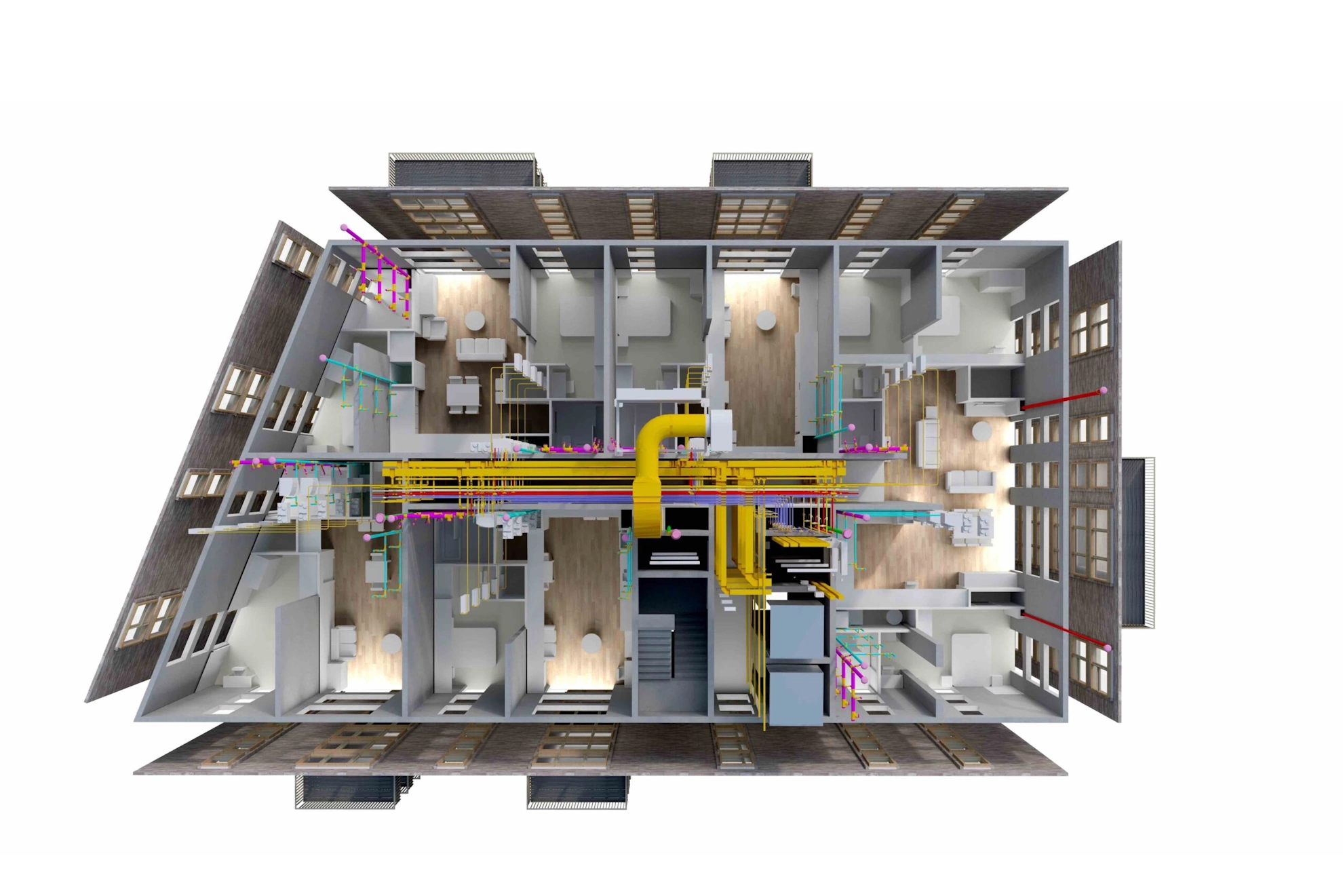
To address this, an Asset Information Model (AIM) is essential. This solution consolidates all building data into a centralised platform, such as models, data, documents and other records related to or required for the operational phase of an asset. With such large areas to manage, original plans and drawings are easily mislaid or unreliable, so new ones can be made using our “Scan to BIM” approach. This essentially involves a 3D laser scan of the interior and exterior, allowing the creation of a BIM model with accurate layout, measurements, and imagery, which can be integrated into the CAFM system (for example to see asset information with the model) and accessed from any browser.
From data to action: IoT and predictive maintenance
In any large or busy environment, asset faults can cause significant and compounding issues for the FM team and building users – and data is key. Integrating IoT (Internet of Things) sensors and BMS (building management systems) into building infrastructure, for example elevators, escalators, and entrance doors can provide significant operational and sustainable benefits. These sensors allow for real time performance management, feeding into the AIM and CAFM system to enable automatic work orders and events – reducing downtime and improving service reliability.
Enhancing user experience with smart interfaces
Technicians working at our customers’ facilities now benefit from intuitive interfaces that combine 360-degree imagery, point clouds, and BIM models. These tools support indoor navigation and asset tracking, allowing staff to locate and manage equipment more efficiently.
Visitors to the buildings also benefit from these innovations, as the same systems can be used to provide wayfinding and real-time information about facilities.
Case study 2: BIM model from drawings
Another way to easily create BIM models is via our service, “Plan to BIM”. If up-to-date 2D drawings or plans are available, 3D BIM models can be created using those instead of using laser scanning. We collaborated with a client in Norway to model a coworking office and lab space. The project involved creating accurate BIM models from existing drawings, which were essential for managing the lifecycle of the building’s spaces. With 400 different tenants and a high turnover rate, they needed precise control over their spaces to accommodate frequent changes and renovations.
The BIM models provided detailed information on areas, floor materials, and technical installations, enabling better space management and planning. Additionally, the models include comprehensive data on fire safety installations, such as fire compartments and extinguishers, ensuring compliance with safety regulations. This implementation has empowered the organisation to efficiently manage their dynamic tenant environment and maintain high standards of safety and functionality.
Case study 3: AI maintenance instructions
The power of AI is becoming more commonplace in FM and is particularly useful when it comes to helping technicians access and digest hefty operation and maintenance (O&M) documentation. Traditionally, O&M documentation was either in digital formats or paper, requiring manual processes to link documents to assets, but AI and IoT tools can streamline this process, making it more efficient and user-friendly.
We have developed an AI agent that can automatically prompt and provide relevant maintenance instructions based on error codes and asset names. Technicians can interact with the AI agent in their language, receiving precise instructions derived from a vast archive of documents. This automation not only saves time but also ensures that technicians have access to accurate and up-to-date information, enhancing the overall maintenance process.
Looking ahead: The future of facility management
These examples of how digitisation can work for building owners illustrates the transformative potential of digital twins when paired with robust data integration and smart technologies. By embracing standards, leveraging IoT, and prioritising user-friendly design, SWG is helping organisations move from reactive maintenance to proactive asset management.
As digital infrastructure becomes increasingly central to building operations, the role of digital twins will continue to grow – enabling smarter, more sustainable, and more responsive facilities.


